
2026-09-18 · David Harlan
Mold Growth After Spring Rains in Chattanooga Neighborhoods
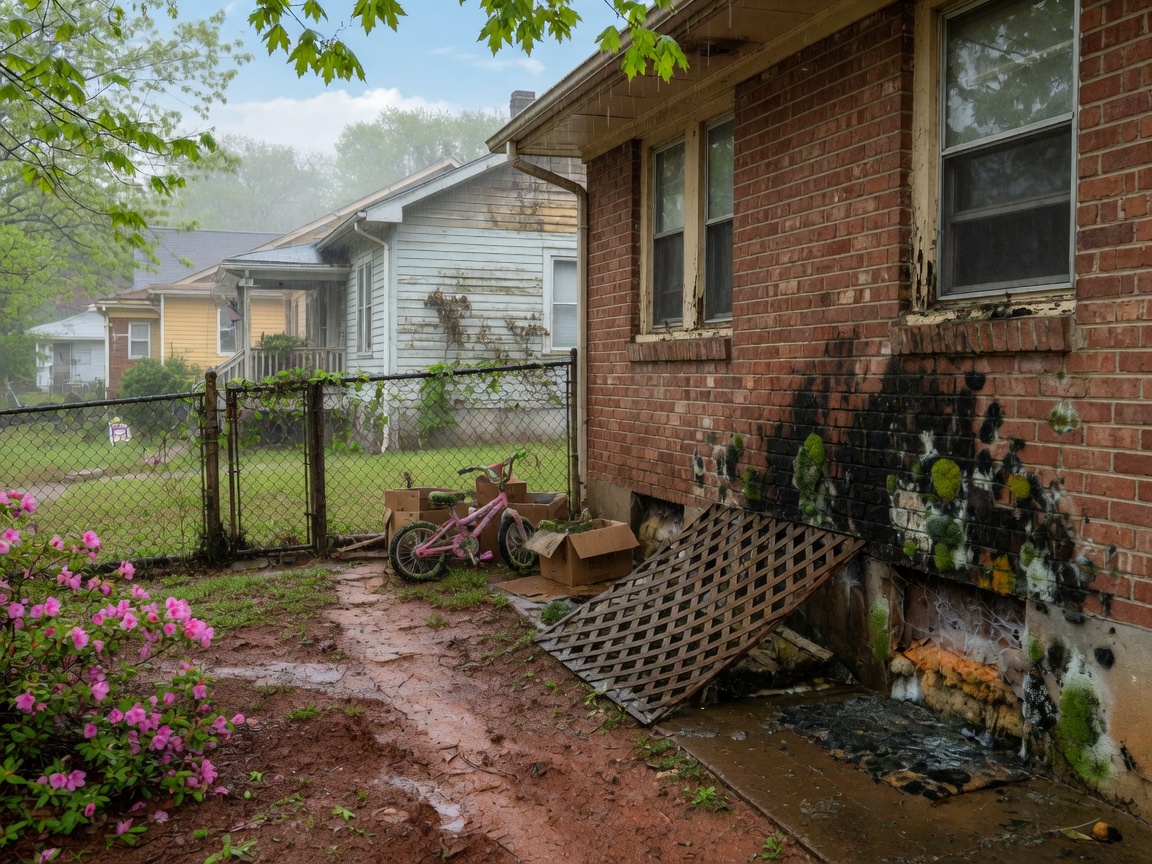
Spring rains in Chattanooga typically spark visible mold colonies within 48 hours in homes throughout St. Elmo, Highland Park, and Brainerd when moisture lingers in crawl spaces and attics.
Chattanooga's Humid Subtropical Climate and Spring Moisture
Chattanooga sits in a humid subtropical zone with four distinct seasons that bring heavy spring downpours followed by rising humidity. These rains soak into the clay-heavy soils of Hamilton County and raise groundwater levels, pushing moisture through foundation cracks common in pre-1970 homes found in North Chattanooga and Lookout Valley. Once interior humidity climbs above 60 percent, spores that already circulate from nearby Lookout Mountain forests begin colonizing drywall and insulation within two days. Properties near the Tennessee Aquarium and Coolidge Park often see faster growth because river proximity adds extra ambient moisture that HVAC systems struggle to remove during sudden warm spells.
Neighborhood Patterns After Heavy Rains
Homes in Highland Park and Brainerd frequently experience basement seepage because many lots slope toward the street with limited French drains. St. Elmo properties built on the lower slopes of Lookout Mountain face similar issues when runoff from Ruby Falls trails saturates yards. In contrast, newer builds in North Chattanooga may still develop attic mold if ridge vents clog during pollen-heavy spring storms. Residents in these areas report musty odors surfacing first in closets and behind washing machines, locations where airflow stays restricted. The same pattern appears in homes near Walnut Street Bridge when flood-stage river levels back water into low-lying yards.
Recognizing Early Growth in Local Housing Stock
Older Chattanooga homes often feature plaster walls over lath that trap water behind surfaces, allowing black mold to spread unseen for weeks. After a multi-day rain event, check for soft baseboards, bubbling paint, and dark spots along ceiling joists in crawl spaces. Basements in Highland Park frequently show efflorescence on concrete walls, a sign that dissolved minerals and moisture are moving upward. Homeowners who notice these signs early can limit spread by improving ventilation before colonies reach HVAC ducts. Mold Inspection and Testing helps confirm species and extent without guesswork.
Practical Steps for Moisture Control
Remove standing water within 24 hours using wet vacuums and dehumidifiers set to 45 percent. Increase airflow by opening windows on dry days and running exhaust fans in bathrooms for 20 minutes after showers. Clean gutters and extend downspouts at least 6 feet from foundations to keep water away from Brainerd and St. Elmo crawl spaces. When growth appears on more than 10 square feet, professional containment and HEPA filtration become necessary to avoid spreading spores to living areas. Black Mold Removal addresses larger infestations while protecting occupied spaces.
Long-Term Prevention in the Chattanooga Valley
Installing vapor barriers and sealed crawl space encapsulation reduces humidity that persists after spring rains. Attic insulation upgrades help when paired with proper ridge and soffit venting, a step that counters the valley's trapped moisture documented in related discussions on local humidity patterns. How Humidity Levels in the Chattanooga Valley Lead to Attic Mold explains seasonal attic risks in more detail. Regular inspections every spring before peak rains allow small leaks to be fixed before they feed hidden colonies behind walls in Lookout Valley homes.