
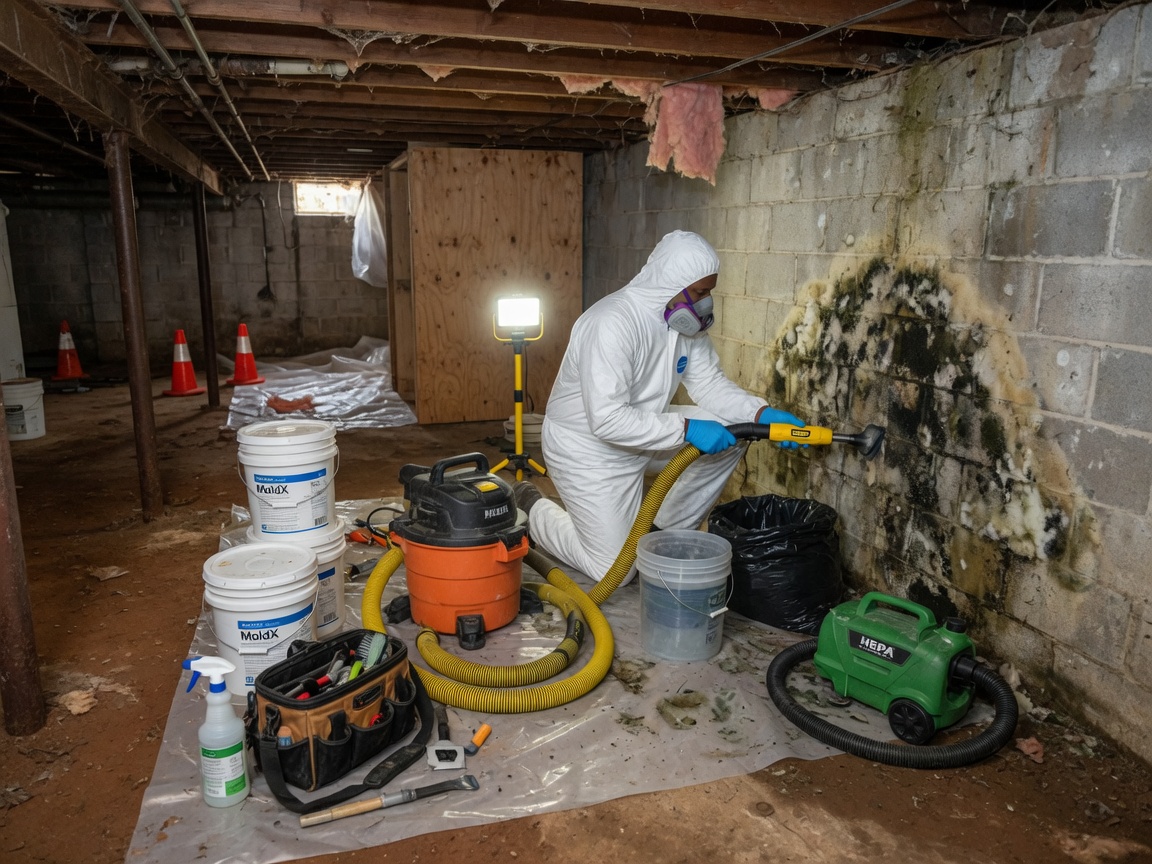
Chattanooga's humid subtropical climate brings heavy spring rains and summer humidity that push moisture into crawl spaces and basements across Hamilton County. Homes in North Chattanooga and Highland Park often sit on older stone foundations with dirt floors or minimal vapor barriers, allowing condensation to form on joists and subfloors. Technicians inspect for hidden growth behind insulation and along sill plates, then remove affected materials while containing the space to prevent spores from migrating into living areas.
Terrain near Lookout Valley and St. Elmo creates drainage challenges where runoff pools against foundations during fall storms. In Brainerd and Downtown Chattanooga, post-WWII homes frequently have shallow crawl spaces with limited access, requiring negative air machines and HEPA filtration during removal. Crews address both visible colonies and the moisture source, such as leaking pipes or poor grading, to keep recurrence low in the county's four-season weather pattern.
Remediation follows IICRC S520 protocols adapted to local conditions, including removal of porous materials like cardboard or carpet backing that trap spores in damp crawl spaces. Technicians document conditions with photos and moisture readings before and after work, then apply antimicrobial treatments only where needed on non-porous surfaces. Homeowners in areas near Walnut Street Bridge or Coolidge Park receive guidance on ventilation upgrades that match the river-influenced humidity levels typical here.
Technician insight
In Chattanooga, the thing that catches most people out with Basement and Crawl Space Mold Remediation is how quickly summer humidity re-wets dirt floors in Lookout Valley and St. Elmo homes once the vapor barrier is missing or torn. Older Highland Park foundations with poor exterior grading let runoff sit against the sill plate all winter, so just killing the mold never holds without fixing the water path first.
Highland Park Crawl Space After Heavy Spring Rains
A 1950s bungalow showed musty odors after weeks of rain. Inspection found active growth on joists and saturated insulation above a dirt floor with no liner. Crews contained the space, removed the wet insulation, cleaned the framing, and installed a sealed vapor barrier tied to the foundation walls. Humidity dropped and stayed low through the following humid season.
Basement and Crawl Space Mold Remediation Services We Offer
✓Crawl Space Mold Removal
Removes visible and hidden mold colonies from joists, insulation, and dirt floors while containing the space to protect the rest of the home.
✓Basement Waterproofing Assessment
Evaluates foundation cracks, grading, and gutter issues around Chattanooga homes that allow water intrusion and repeated mold growth.
✓Vapor Barrier Installation
Lays sealed 6-mil or thicker liners over dirt floors in crawl spaces to reduce ground moisture common in Hamilton County's humid conditions.
✓Insulation Replacement After Mold
Removes contaminated fiberglass or cellulose insulation and installs new material rated for high-humidity environments found near Lookout Mountain.
✓Dehumidifier Setup and Monitoring
Places and calibrates units sized for basement or crawl space volume to maintain levels below 55 percent in Chattanooga's summer humidity.
Basement and Crawl Space Mold Remediation Cost in Chattanooga, TN
| Service | Typical Range | What Affects It |
|---|---|---|
| Crawl space mold remediation (under 500 sq ft) | $1,200–$2,400 | Higher when insulation must be fully replaced or access is tight. |
| Basement mold remediation (under 800 sq ft) | $1,800–$3,500 | Varies with foundation type and extent of hidden growth behind walls. |
| Vapor barrier addition during remediation | $600–$1,100 | Includes sealing to walls and piers. |
| Dehumidifier rental for drying phase | $150–$350 | Weekly rate based on unit size needed. |
Ranges are typical for Chattanooga, TN and confirmed with an exact written quote before any work starts.
How it works
- 1
Initial Moisture And Growth Inspection
Technicians enter the crawl space or basement with moisture meters and borescopes to map affected areas and identify water sources tied to local drainage patterns.
- 2
Containment And Air Filtration
Plastic barriers and negative air machines isolate the work zone so spores do not travel into living spaces common in compact North Chattanooga lots.
- 3
Removal Of Affected Materials
Contaminated wood, insulation, and debris are cut out and bagged for disposal while non-porous surfaces receive cleaning and treatment.
- 4
Drying And Final Verification
Industrial fans and dehumidifiers dry the space, followed by post-remediation moisture checks before barriers come down.
Pricing
Cost depends on square footage, access difficulty, and whether moisture sources require separate repairs.