
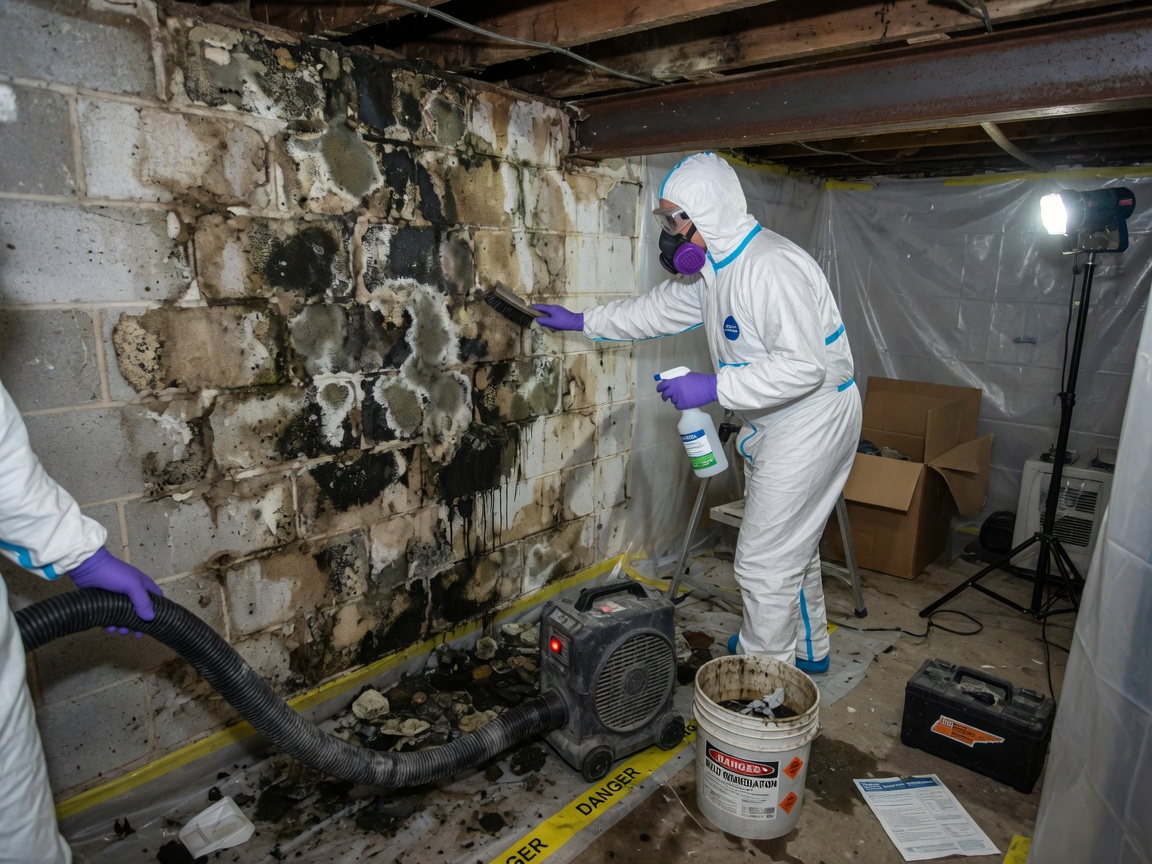
Chattanooga's humid subtropical climate with four distinct seasons creates persistent moisture challenges in homes built before the 1980s, especially in neighborhoods like Highland Park and Brainerd where original brick and stone foundations meet modern additions. Black mold often takes hold behind plaster walls or in unvented crawl spaces after roof leaks or poor drainage from Lookout Mountain runoff. Remediation requires full containment, negative air machines, and removal of affected porous materials rather than surface treatments that fail in our high-humidity environment.
Properties near the Tennessee River or in Lookout Valley face additional risks from seasonal flooding and elevated groundwater that wicks into slab foundations. In these cases, simply removing visible growth leaves spores that reactivate during summer humidity spikes. Technicians must map moisture with infrared cameras, excise contaminated drywall or subflooring, and apply EPA-registered antimicrobials before drying the structure to below 50 percent relative humidity. Failure to address hidden pockets behind walnut street bridge-era homes in North Chattanooga commonly leads to recurrence within one season.
Homeowners in Downtown Chattanooga and St. Elmo often encounter black mold in finished basements where original limestone foundations meet modern HVAC systems. These mixed-age structures trap condensation against cool stone walls. Proper removal includes isolating the work zone, HEPA vacuuming settled spores, and replacing insulation that has absorbed water. Local code requires proper disposal of contaminated debris at Hamilton County facilities, and skipping this step risks fines or neighbor complaints in dense blocks.
Technician insight
In Chattanooga, the thing that catches most people out with Black Mold Removal is how quickly our humid subtropical summers reactivate spores left behind in the crawl spaces of 1940s–1960s brick homes in Brainerd and Highland Park. Homeowners often treat only the visible patch on drywall while groundwater from Lookout Mountain slopes keeps feeding the problem underneath.
Hidden Growth After Summer Leak in North Chattanooga
A homeowner in North Chattanooga noticed a musty odor near the kitchen after heavy June rains. Inspection revealed black mold behind original plaster and in the crawl space where a slow roof leak had soaked insulation. Crews contained the area, removed affected materials, treated the joists, and improved ventilation. The home passed clearance testing with no recurrence during the following humid season.
Black Mold Removal Services We Offer
✓Crawl Space Black Mold Remediation
Encapsulation and removal of black mold in Hamilton County crawl spaces where river humidity and poor grading allow growth under older homes in Brainerd and Lookout Valley.
✓Attic Black Mold Removal
Inspection and remediation of black mold in attics caused by roof leaks or inadequate ventilation common in North Chattanooga and St. Elmo properties near Lookout Mountain.
✓Basement Black Mold Extraction
Targeted removal from finished and unfinished basements in Highland Park and Downtown Chattanooga where limestone foundations and seasonal moisture create persistent colonies.
✓HVAC Black Mold Cleaning
Duct and coil cleaning to eliminate black mold spread through central systems in homes throughout Hamilton County, preventing circulation during humid summer months.
✓Post-Flood Black Mold Remediation
Rapid response removal after river or stormwater flooding in Lookout Valley and areas near the Walnut Street Bridge where standing water leads to hidden growth within 48 hours.
Black Mold Removal Cost in Chattanooga, TN
| Service | Typical Range | What Affects It |
|---|---|---|
| Initial Inspection and Testing | $200–$450 | Varies by property size and number of affected rooms in neighborhoods like St. Elmo or Brainerd. |
| Crawl Space Remediation | $1,200–$3,800 | Higher in Lookout Valley homes with poor drainage or standing water. |
| Attic Black Mold Removal | $800–$2,500 | Depends on insulation type and roof access in North Chattanooga properties. |
| Basement Extraction | $1,000–$3,200 | Increases with finished walls or limestone foundation work in Highland Park. |
Ranges are typical for Chattanooga, TN and confirmed with an exact written quote before any work starts.
How it works
- 1
Initial Assessment
Technicians inspect affected areas in the home using moisture meters and infrared imaging to locate hidden growth without disturbing spores.
- 2
Containment Setup
Plastic barriers and negative air pressure isolate the work zone to prevent cross-contamination to unaffected rooms in the Chattanooga property.
- 3
Removal and Cleaning
Contaminated materials are removed, surfaces are HEPA-vacuumed, and EPA-registered treatments are applied before drying to local humidity standards.
- 4
Final Verification
Post-remediation inspection confirms moisture levels and air quality meet clearance criteria before barriers are taken down.
Pricing
Costs depend on square footage affected, access difficulty in older Hamilton County homes, and whether HVAC or structural repairs are required.