
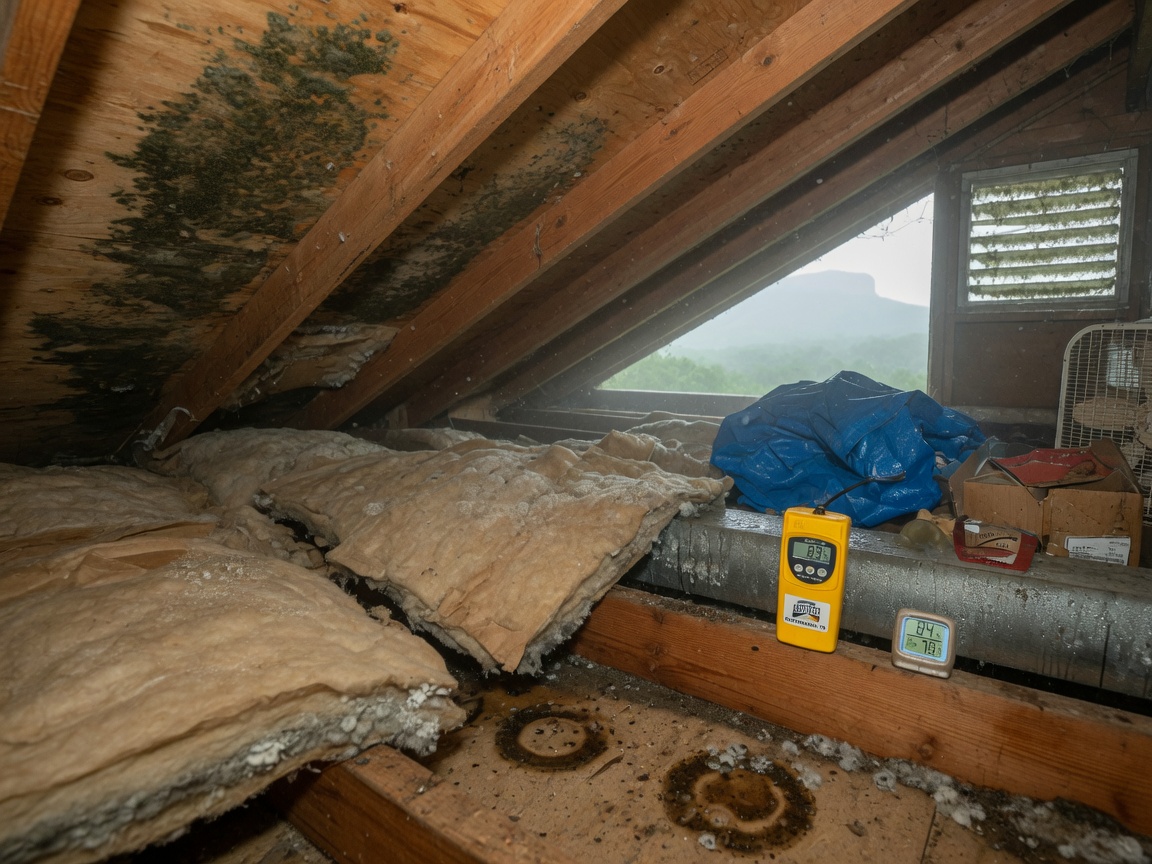
Downtown Chattanooga in ZIP 37402 covers the city centre, the Southside and the riverfront, and the building stock here is nothing like the rest of Hamilton County. Converted warehouses and lofts, older masonry buildings with below-grade storage, mid-rise condominiums, and ground-floor commercial space with apartments above. Shared walls, shared systems and shared responsibility change how mold work has to be approached.
The defining downtown problem is that the moisture source is frequently not in the unit with the mold. Water migrates from an adjacent condo, down from a roof two floors up, or through a party wall from a neighbouring building, and the owner who finds the growth has no access to the cause. We spend more time on diagnosis downtown than anywhere else we work, and often more time establishing who is responsible for the fix than on the remediation itself.
The masonry conversions bring a second issue. Original brick and stone walls in buildings near the river and on the Southside were never built with modern vapour barriers, and when a warehouse is converted to residential the interior framing and drywall go against a wall that breathes moisture. That cavity is where we find growth. Work here is often commercial mold remediation given the mixed ownership, with mold clearance testing as independent verification, which matters more when multiple parties are involved. See also North Shore and St. Elmo.
Around Downtown Chattanooga
We regularly work near:
- 📍Southside
- 📍Market Street
- 📍Riverfront Parkway
- 📍Chattanooga Choo Choo
- 📍Finley Stadium
Mold Remediation in Downtown Chattanooga — Local Notes
- •Downtown building stock is converted warehouses, lofts, mid-rise condos and mixed commercial-residential, so shared walls and shared systems determine the approach more than the growth itself.
- •The moisture source is frequently in a different unit or building from the mold, which makes diagnosis and establishing responsibility the largest part of many downtown jobs.
- •Warehouse conversions put modern framing and drywall against original brick and stone that was never designed with a vapour barrier, and that cavity is where growth is typically found.
- •Independent clearance testing carries more weight downtown than elsewhere, because multiple owners, an HOA or an insurer are usually relying on the same document.